
Walls Rules: The Complete Guide
Everything you need to play Walls, in one page. The diagrams below are drawn in the same colors as our board, so what you learn here looks exactly like what you will play.
Last updated:
The Board and the Goal
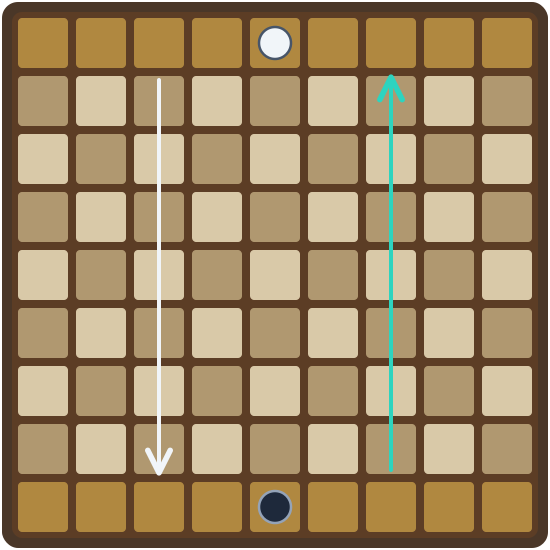
Walls is played on a 9 by 9 grid of squares. Each player has a single pawn. Player 1 (the light pawn) starts on the middle square of the top row, and Player 2 (the dark pawn) starts on the middle square of the bottom row. The two highlighted rows along the top and bottom are the goal rows.
The aim is a race. Player 1 wins by reaching any square on the bottom row; Player 2 wins by reaching any square on the top row. In other words, each pawn is trying to get all the way across to the row the other pawn started on. Player 1 moves first, and turns alternate from there.
Taking a Turn: Move or Wall
This is the rule that defines Walls, so it is worth stating plainly: on your turn you do exactly one thing. You either move your pawn one square, or you place one wall. Never both, and you can never skip your turn. That single choice, made over and over, is the entire game. Every wall you spend is a move you did not use to advance, and every step you take is a wall you did not place to slow your opponent.
Because the choice is so stark, Walls rewards patience and punishes waste. A wall thrown down without a clear purpose is gone forever, and the opponent simply walks around it while you fall a tempo behind in the race.
Moving Your Pawn
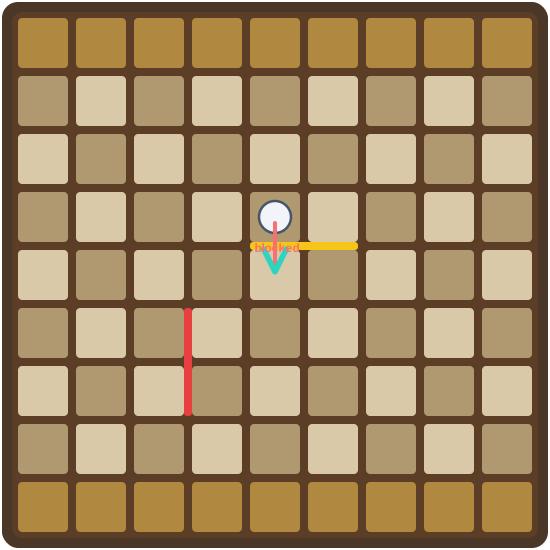
A pawn moves one square at a time, straight up, down, left, or right, onto any open square. There are no diagonal moves under normal circumstances, and there is no limit to how often you may move rather than place walls. A pawn cannot move through a wall and cannot leave the board.
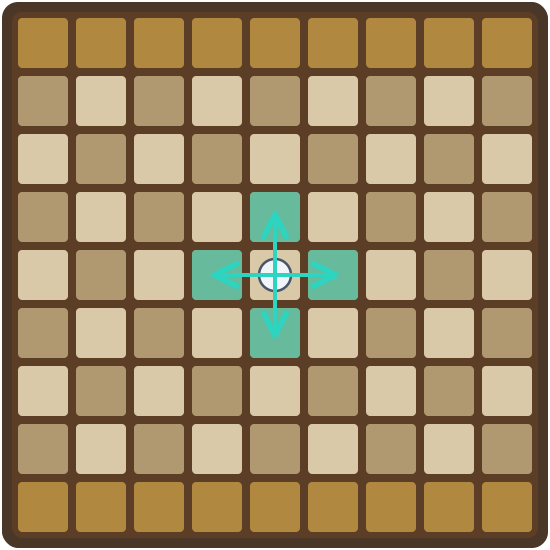
On our board, clicking your pawn lights up every legal destination, so you never have to guess which squares are reachable. The one exception to plain orthogonal movement is when the two pawns meet, which has its own rule, covered below.
Placing Walls
Instead of moving, you may spend a wall. Each player begins the game with ten walls and no more are ever handed out, so the supply is precious. A wall is placed in the groove between squares and spans the length of two squares, blocking movement across that edge for the rest of the game. Walls block both players equally, including the one who placed it, so a wall is a tool that shapes the whole board, not just the opponent's half.
Walls come in two orientations: horizontal walls block vertical movement, and vertical walls block horizontal movement. A few placement limits keep the board sane: a wall may not overlap or sit directly end to end on top of another wall of the same orientation, and a horizontal and a vertical wall may not cross through the same center point. Our board previews every wall as you hover, showing cyan for a legal placement and red for an illegal one, so you see the rule before you commit.
The Path Rule: A Route Must Always Stay Open
There is one rule that stops Walls from collapsing into a frustrating stalemate, and it is the heart of the game's design: a wall may never completely cut a player off from their goal. After every wall placement, both players must still have at least one open path, however long and winding, to the row they are racing toward. A wall that would seal off either pawn entirely is simply illegal, and our board refuses to place it.
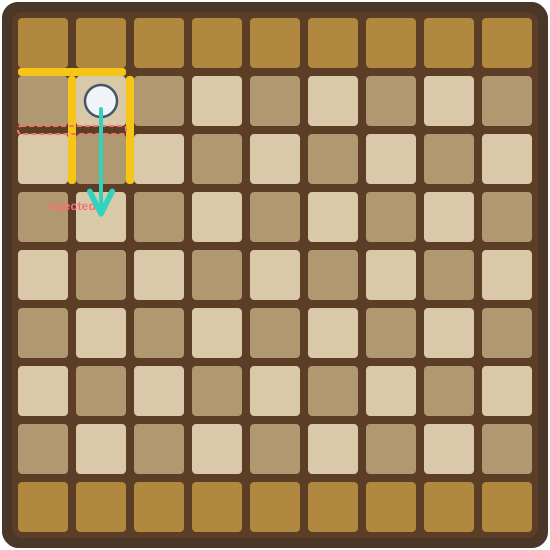
This single rule is what makes walls a tool for slowing rather than trapping. You cannot win by imprisoning your opponent; you can only force them onto a longer road than the one you are taking yourself. The whole skill of the game lives in that gap.
When Pawns Meet: Jumping
Because both pawns are racing toward each other, they often end up face to face. When your opponent's pawn sits directly next to yours, you do not waste a turn stepping around it. Instead, you jump. If the square directly beyond the opponent is open, you leap straight over them and land on it, covering two squares in one move.
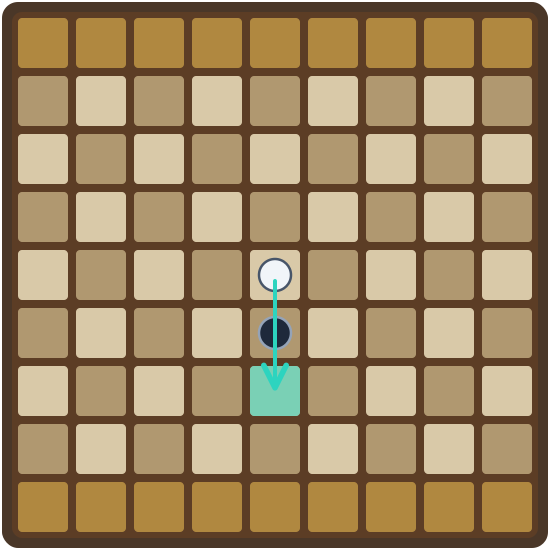
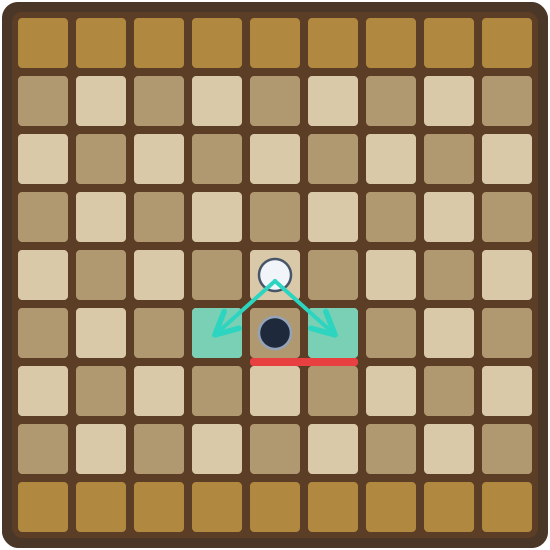
If the straight jump is blocked, either by a wall sitting behind the opponent or by the edge of the board, you may instead jump diagonally to one of the two squares beside them. This is the only time a pawn ever lands on a diagonal, and it exists purely so a face-off can always be resolved.
Winning the Game
The first pawn to reach any square on the opposite starting row wins immediately. That is the whole victory condition, and there is no other way for the game to end: Walls has no captures, no elimination, and no draws. Because the path rule guarantees both players always have a route home, somebody always gets there first. The race genuinely decides it.
That means a game of Walls is always a contest of two questions answered move by move: how do I shorten my own road, and how do I lengthen yours? Hold that in mind and you already understand the game. The strategy guide turns it into a plan.
Try the Rules on a Real Board
Rules become reflexes only through play. Open our board, set the AI to level 1 or 2, and play a few casual games. Every legal pawn move lights up when you select your pawn, every wall previews legal or illegal before you place it, and the path rule is enforced for you automatically. Two or three games and none of this will need a second thought.